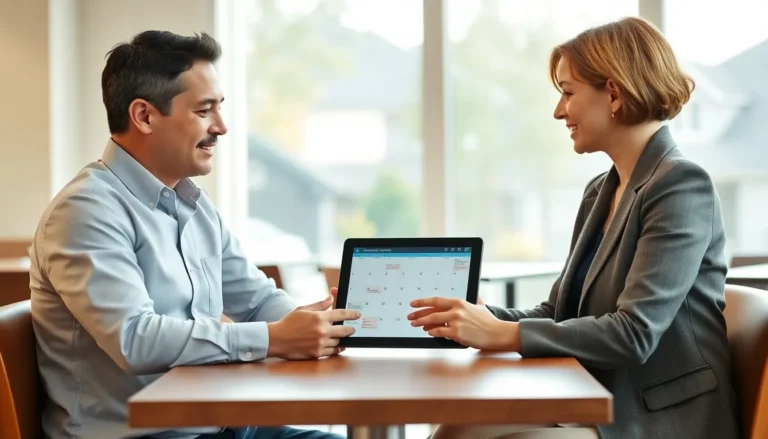
Co-parenting trends 2026 are shaping how separated families raise their children together. Parents, therapists, and legal professionals are paying close attention to the shifts happening now. Technology plays a bigger role. Mental health gets more focus. Custody arrangements look different than they did five years ago.
These changes reflect a broader understanding of what children need to thrive after their parents separate. The year ahead brings new tools, new strategies, and new priorities for co-parents everywhere. Here’s what to expect.
Table of Contents
ToggleKey Takeaways
- Co-parenting trends 2026 place technology at the center of communication, with apps offering AI-powered language suggestions and real-time shared calendars.
- Flexible, child-centered custody arrangements are replacing rigid 50/50 splits, allowing schedules to adapt as children grow.
- Mental health is now a top priority, with more families seeking co-parenting counseling and proactive therapy for children.
- Parallel parenting is gaining traction as an effective strategy for high-conflict situations, minimizing direct contact while keeping both parents involved.
- Nesting arrangements, where children stay in one home while parents rotate, continue to grow in popularity for families navigating early separation.
- Successful co-parents in 2026 treat custody schedules as living documents and prioritize adaptability over rigid thinking.
Technology-Driven Communication and Coordination
Co-parenting trends 2026 show a clear pattern: technology now sits at the center of how parents communicate. Apps like OurFamilyWizard, Cozi, and TalkingParents have gained millions of users. These platforms reduce direct conflict by creating documented, neutral spaces for scheduling and messaging.
Shared digital calendars have become standard. Parents use them to track school events, medical appointments, and extracurricular activities. Both parents see the same information in real time. This transparency cuts down on misunderstandings.
AI-powered features are emerging in 2026. Some apps now suggest neutral language when a message sounds too aggressive. Others flag scheduling conflicts before they become arguments. These tools don’t replace good communication skills, but they help parents who struggle to keep exchanges civil.
Expense tracking has also moved online. Parents split costs for clothes, sports fees, and tutoring through built-in payment systems. The documentation helps during tax season and prevents disputes about who paid for what.
Video calling remains essential for long-distance co-parenting. Children maintain relationships with both parents even when geography separates them. Courts increasingly recognize virtual visitation as a valid part of custody agreements.
The downside? Screen fatigue is real. Some families report that constant digital coordination feels exhausting. Finding the right balance between staying connected and stepping back matters more than ever.
Flexible and Child-Centered Custody Arrangements
Rigid 50/50 splits are giving way to more flexible models in 2026. Courts and mediators now focus on what works for each child rather than applying one-size-fits-all formulas.
Co-parenting trends 2026 emphasize child-centered scheduling. A teenager might prefer staying at one home during the school week to reduce disruptions. A younger child might need more frequent transitions to maintain bonds with both parents. Flexibility allows families to adjust as children grow.
“Nesting” arrangements continue to gain popularity. In this model, children stay in one home while parents rotate in and out. The kids get stability. The parents handle the inconvenience of moving. It’s not practical for everyone, but it works well for some families during transitions like the first year after separation.
Holiday and vacation schedules are becoming more creative. Instead of strictly alternating years, some parents share holidays by splitting the day or celebrating on different dates. The goal is reducing stress for children who don’t want to choose between parents.
Courts are also paying more attention to children’s input. Older kids, especially teenagers, increasingly have a voice in custody decisions. Judges ask what they prefer and factor those preferences into rulings.
This shift requires parents to communicate well and stay adaptable. Rigid thinking causes problems. Successful co-parents in 2026 treat custody schedules as living documents that change when circumstances change.
Mental Health and Emotional Well-Being Priorities
Mental health has moved from afterthought to priority in co-parenting trends 2026. Parents recognize that divorce and separation affect children emotionally, and they’re taking action.
Family therapists report increased demand for co-parenting counseling. Parents attend sessions together, not to reconcile, but to learn how to work as a parenting team. These sessions cover communication strategies, conflict de-escalation, and how to present a united front to children.
Children’s therapy has also become more common. Parents proactively enroll kids in counseling to help them process the changes in their family structure. The stigma around therapy has faded significantly, especially among younger parents.
Self-care for co-parents is getting attention too. Burned-out parents can’t show up for their kids. Support groups, both in-person and online, give co-parents space to vent, share strategies, and feel less alone.
Schools are stepping up. Many now offer counseling services and support groups for children from separated families. Teachers receive training to recognize signs of stress and connect kids with resources.
Co-parenting trends 2026 also include more honest conversations with children. Parents explain situations in age-appropriate ways rather than pretending everything is fine. This transparency helps children trust their parents and process their own feelings.
Parallel Parenting as a Conflict-Reduction Strategy
Not all co-parents can communicate peacefully. High-conflict situations require a different approach. Parallel parenting offers a solution that’s gaining traction in 2026.
In parallel parenting, both parents stay involved in their children’s lives, but they minimize direct contact with each other. Each parent makes decisions independently during their parenting time. Communication happens only through written channels, often apps that create records.
This model protects children from witnessing parental conflict. Kids don’t hear arguments. They don’t become messengers between hostile parents. They experience two separate but stable environments.
Courts increasingly recommend parallel parenting for high-conflict cases. Judges recognize that forcing hostile co-parents into constant collaboration creates more harm than good. Detailed parenting plans reduce the need for ongoing negotiation.
Co-parenting trends 2026 show therapists supporting this approach too. They help parents accept that parallel parenting isn’t failure, it’s a practical response to a difficult situation. Children benefit when their parents stop fighting, even if that means less cooperation.
Over time, some parallel parents transition to traditional co-parenting. Emotions cool. Trust rebuilds. But others maintain the parallel structure long-term, and that’s okay. The priority is the child’s well-being, not achieving an ideal that doesn’t fit every family.